
Why Digital Programmes Need a Transformation PMO
Digital transformation requires cadence, risk visibility, decision rights and benefits tracking, not only implementation plans.
Published: | Category: PMO Insight
A practical briefing for leaders evaluating transformation, AI adoption, CRM-led operating models or execution governance.
PMO as a leadership mechanism
A transformation PMO is not an administrative function. It gives leaders a reliable view of progress, risks and benefits, and a structured way to make decisions across programmes. When positioned this way, the PMO helps sponsors steer the transformation rather than simply reporting on it.
Decision cadence and risk visibility
Programmes slow down when decisions wait. Define which forum makes which decisions, how often each meets, and how issues are escalated. Maintain a single log of risks, assumptions, issues, dependencies and decisions, so leaders can see what needs their attention.
Benefits tracking from day one
Define expected benefits, baselines and owners at the start, not at go-live. Track leading indicators during delivery and actual benefits after go-live, because most value is realised after the project team has moved on. Benefits tracking keeps the programme focused on outcomes rather than activity.
Vendor governance and scope discipline
Digital programmes often involve several vendors. The PMO should manage vendor performance against contracts, coordinate dependencies between vendors and control scope changes through one transparent process. This prevents cost and schedule drift that no single vendor owns.
Dashboards for sponsors
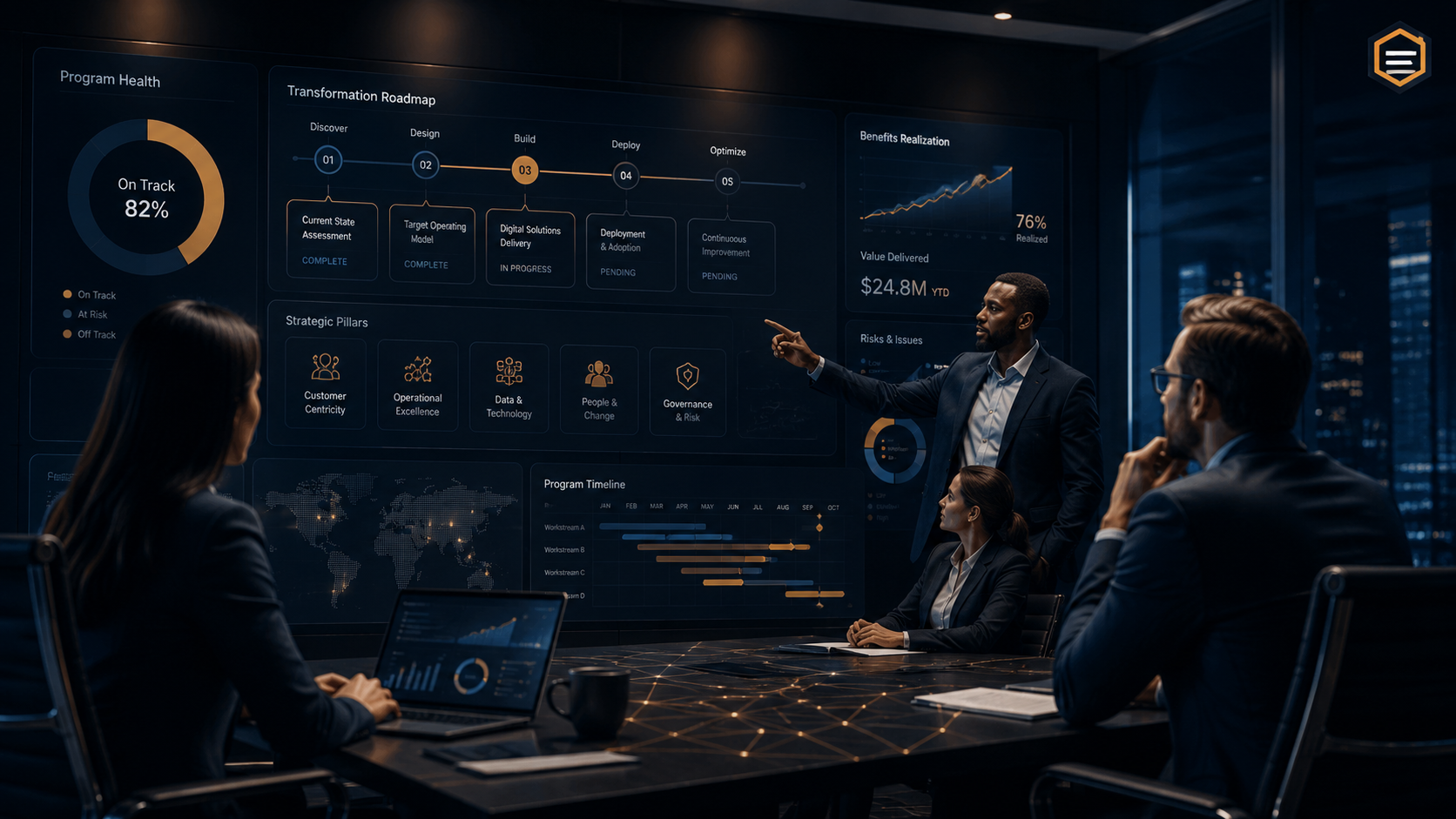
Sponsors need a concise view of schedule, cost, risks, decisions required and benefits, updated on a fixed cadence. A good dashboard fits on one page, uses consistent definitions and highlights exceptions, so sponsors spend their time on the issues that need them.